

A complete, warm, and practical guide to reducing stress in indoor cats. Real advice, strategies, personal experience, and a down-to-earth approach to improving your cat’s well-being at home.
If you’re reading this, you’ve probably noticed a change in your cat’s behavior. Maybe they’re meowing more than usual, avoiding spots where they used to rest, or acting irritable for no clear reason. You might have the feeling they’re trying to tell you something, but you haven’t quite figured out how to read it yet. Trust me, I know exactly what that mix of worry and confusion feels like.
I’m sharing all of this because reducing stress in indoor cats isn’t just a list of quick tricks. It’s a process of understanding each other. It’s learning to see the world the way they see it, to pick up on small cues, to adjust the home from a place of empathy and calm. That path, even though it can be confusing at first, ends up being a beautiful experience. That’s why I want to walk through it with you.
Why Do Indoor Cats Get Stressed? Even When It Looks Like They’re Living in a Feline Spa.
Sometimes someone tells me they don’t understand how a cat living in an apartment, with a bed, food, toys, and zero danger, could possibly be stressed. I get it. I used to think the same thing. The reality is that stress in indoor cats is far more common than we think, and it has nothing to do with how well we take care of them. If anything, it usually shows up because their emotional and mental needs aren’t always as obvious as the physical ones.
Cats are animals that, in the wild, have complex routines. They explore, calculate distances, patrol key spots in their territory, hunt, rest, climb, and keep watch. When they live indoors, a lot of that world disappears. That’s not a bad thing; they actually live longer and better than on the street. But their inner world doesn’t vanish just because they’ve been domesticated. They still need challenges, security, control, and a certain sense of independence.
Lack of Stimulation: When Boredom Turns Into Anxiety
This was one of the biggest eye-openers for me. I used to think a cat that slept a lot was a happy cat. They do sleep a lot, sure, but not that much. What happens is that if the environment is short on stimulation, they can’t find activities to channel their natural energy, and they slip into a kind of emotional flatline. Prolonged boredom in a cat isn’t just boredom. It can turn into frustration, and if that frustration sticks around, it eventually becomes stress.
A cat without enough stimulation might start developing repetitive behaviors, persistent meowing for no obvious reason, or even bursts of nighttime hyperactivity. It’s their way of trying to compensate for a restless mind that’s looking for action and can’t find any.
Changes in Routine: The Achilles Heel of Feline Stability
One of the most defining traits of cats is their love of predictability. They like knowing what’s going on in their house, how their territory is laid out, and what order things happen in. When something changes, even if it seems insignificant to us, it can affect them way more than we’d expect.
I remember when I moved the bed to make better use of the bedroom space. For me, it was ten minutes of rearranging furniture. For Minursi, it was like a stranger had walked in and reorganized his world. He spent two days watching everything with suspicion, avoiding spots where he used to sleep without a care. That’s when I realized his emotional stability also depended on how I changed the environment.
Competition for Resources: Even If They Live Alone
This might sound odd, but even cats that live alone can feel a kind of internal competition for resources. Not because another cat is competing with them, but because instinctively, they need to make sure their access to food, water, resting spots, elevated areas, and observation points isn’t compromised. If any of those key spots becomes hard to reach, too exposed, or doesn’t meet their expectations, their anxiety can creep up without you noticing at first.
Too Much Silence or Too Much Noise: The Extremes That Throw Off Any Cat
It might surprise you, but living in an overly quiet environment can actually make them feel insecure. Every small unexpected noise becomes an alert. On the flip side, a space with constant noise, yelling, construction, or sudden jolts can overload their sensory system. Cats process their surroundings with far more intensity than we imagine, so any extreme, whether too little or too much, affects them.
How to Tell If Your Cat Is Stressed, Even When They’re Good at Hiding It
Cats have an impressive ability to mask discomfort. It’s part of their nature to protect themselves by appearing strong. That’s why we often don’t catch the stress until it’s already fairly advanced. Learning to spot the early signs is a gift you can give both your cat and yourself.
Physical Signs That Fly Under the Radar but Say a Lot
Some signals seem tiny, almost insignificant, but together they paint a clear picture. You might notice they’re eating faster or less than before. Or losing fur in specific areas. Maybe one day you realize their pupils are more dilated than usual, even when there’s plenty of light. Or their overall posture looks more tense, like they’re walking around permanently ready to react to something.
It also happens that they stop grooming properly or, on the flip side, start licking themselves compulsively until little bald patches appear. Each cat expresses stress differently, just like people do.
Emotional Signs: The Ones That Speak Without Words
This is where those shifts in attitude come in that you couldn’t quite define, but you know are there. They might become more irritable, or maybe more clingy. They might follow you around constantly or disappear for hours. They might seem unsure in moments where they used to be confident. These are feelings that, if you’re the person living with them, you pick up on right away.
Behavioral Signs: The Red Flags You Can’t Ignore
When stress crosses a certain threshold, the changes become obvious. Peeing outside the litter box, scratching furniture in ways they never did before, marking areas of the house, meowing at dawn for no apparent reason, or showing sudden aggression are all direct warnings that something isn’t right for them.
I want to be clear about something here. These behaviors aren’t punishment or defiance. They’re your cat’s way of asking for help because they don’t know how to handle it any other way.
How to Reduce Stress in Indoor Cats: Strategies That Actually Work
When I started looking for ways to help Minursi relax, I ran into a huge pile of scattered advice that didn’t seem to connect. Some talked about toys, others about pheromones, others about routines, and others about human interaction. They all had something to offer, but it took me a while to understand that the key was combining several of these strategies in a way that made sense together. Feline stress doesn’t go away with a single move. It takes a set of small actions that, together, create a safe, stimulating, and loving environment.
The Power of Environmental Enrichment: How to Turn Your Home Into a Balanced, Stimulating Space
One of the ideas that changed my life with Minursi the most was learning about environmental enrichment. It’s not just about putting out new toys. It’s about giving them opportunities to explore, climb, observe, rest, mark, simulate hunting, and feel like they own their space. When a cat lives in an apartment, their world shrinks to whatever we provide. That’s why it matters so much that their world is varied, safe, and engaging.
Vertical Enrichment: The Higher, the Better
Cats need height to feel at ease. From up high, they can survey their surroundings, anticipate what’s happening, and relax because everything is under control. The good news is you don’t need to turn the house into a feline adventure park. A few well-placed spots do the trick.
You can use sturdy shelves that form little vertical “pathways,” or set up a tall scratching post with multiple levels. You can also make the top of a wardrobe accessible by placing a small blanket or thin mat up there to invite them to use it as an elevated hideaway. If you put a high spot near a window, even better, because the view gives them tons of entertainment. It’s one of the best ways to reduce stress in cats.
When I set up a lookout perch by the living room window, I did it almost on a hunch, and it turned out to be one of the best decisions I’ve made. It gave him height, but also movement, light, shadows, and the sense that the world keeps going even though he lives indoors. That corner became his way of meditating.
Scratching Posts Done Right: The Natural Stress Reliever We Often Place Wrong
Scratching isn’t a bad habit. It’s a basic behavior that helps cats stretch their muscles, release pent-up energy, and mark their territory in a completely normal way. The problem is, we often put scratching posts in spots where they’ll never use them because the location doesn’t serve their social purpose. A scratcher hidden behind a piece of furniture is basically useless.
It’s better to place them where your cat passes through often, near doorways, next to their bed, or by areas where they’ve already shown interest in scratching. Offering different types helps too, so they can choose what they need in the moment. Some prefer vertical sisal posts, others enjoy angled ones, and others go crazy for flat cardboard scratchers.
Once I understood this, instead of scolding Minursi for scratching a leg of the couch, I placed a big scratcher right next to it. He stopped going after the couch and started using the post as part of his morning routine. It was a relief for both of us.
Play That Triggers the Hunting Instinct: The Best Daily Medicine for Anxiety
A cat that doesn’t hunt is a cat that builds up energy and tension with nowhere for it to go. They don’t need to catch anything real, obviously, but they do need to mentally replay that cycle of theirs: watch, approach slowly, chase, catch, and finally relax. This process releases hormones that lower stress, stimulates their mind, and builds confidence.
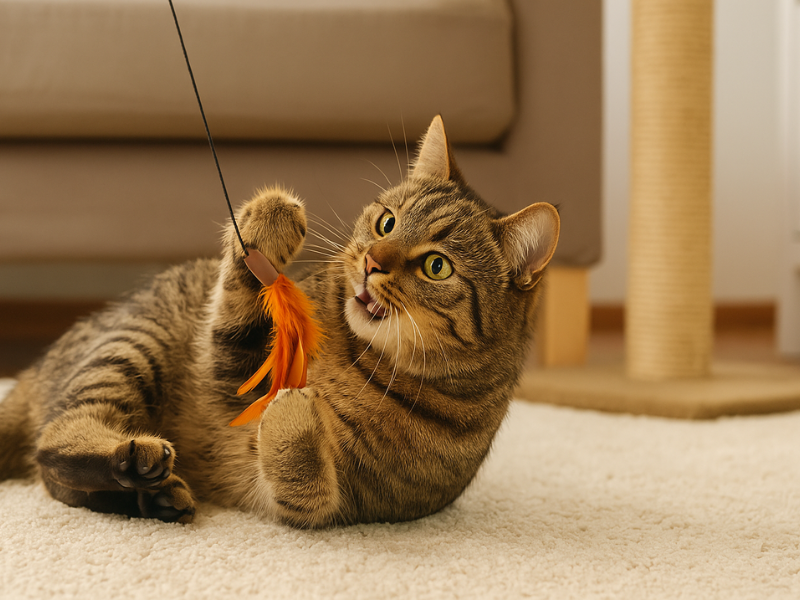
The trick is not to just wave a toy around randomly. Try to make the “prey” behave like something real. Let it hide, move, disappear for a moment, come back. That makes the game deeper and more satisfying for them. When they finally catch it, let them savor the moment. Don’t snatch the toy away mid-victory, because that just adds frustration.
Spending ten minutes a day on this kind of play made an enormous difference in Minursi’s emotional state. He started sleeping more peacefully, asking for less anxious attention, and acting more confident throughout the day.
Sensory Enrichment: Small Details That Massively Change How They Experience Their Space
We sometimes think cats only get stimulated through movement, but they also need variety in sounds, smells, and textures. A home with diverse sensory input is a home where the cat can engage their mind without needing to be in constant motion.
Something as simple as playing soft nature sounds, leaving a new cardboard box in the living room, or occasionally introducing a toy with a different texture can change their whole day. You can also offer catnip or silvervine, always watching their reaction and not overdoing it. Every cat has their own threshold, and it’s important to respect it.
How to Create an Emotionally Safe Environment: What Cats Value Most Even If They Don’t Say It
This part was one of the most eye-opening for me. I’d always focused on improving the physical environment, but it took me a while to discover how much the emotional environment matters. I can tell you it has a massive impact on feline well-being.
Predictable Routines: The Foundation of Their Daily Stability
Cats find a lot of peace in repetition. Not because they’re boring, but because predictability gives them security. Knowing when they eat, when they play, when they sleep, and how the house operates lets them relax, because they feel like they’re in control of their universe.
You don’t need to be precise to the minute, but keeping a general order helps. Playing at the same time every day, feeding them on a pattern, avoiding constant furniture changes, and cutting down on sudden movements in their territory goes a long way toward keeping a cat calm.
When I set up a play routine in the afternoon, before dinner, I noticed Minursi started looking forward to that moment. His behavior became more balanced and his stress level dropped without me having to do anything more complicated.
Safe Spaces: Places to Disappear When They Need To
A stressed cat needs a corner where they can retreat without feeling like they’re running away. That space has to be theirs alone, with no interruptions, soft lighting, and a calm atmosphere. It can be a fabric cave, a box, a spot under the bed, or a blanket draped strategically over a chair.
The key is that nobody invades that space. If your cat retreats there, it’s a sign they’re self-regulating. Respecting that gesture strengthens your relationship and directly supports their emotional stability. It’s a fundamental piece of reducing stress in cats.
Synthetic Pheromones: An Extra Layer of Support
They’re not a solution on their own, but they’re a helpful tool when combined with a good environment. Synthetic pheromones mimic the chemicals a cat naturally produces when they feel calm and safe in their territory. Using them during times of change, construction, visitors, or moves can noticeably take the edge off their stress.
Emotionally Supporting Your Cat Without Overwhelming Them: A Delicate Balance
Something I learned through trial and error is that it’s not always a good idea to approach a stressed cat to “calm them down.” Sometimes what they need is space, quiet, or simply knowing you’re there without getting into their personal zone.
Signs They Want Your Company
When a cat rubs gently against you, lies down near you but not on top of you, gives you slow blinks, or follows you around the house without pressure, they’re telling you your presence brings them calm. In those moments, you can pet them, talk softly to them, or simply sit with them while they rest. The key is to follow their lead.
Signs They Need Space
Ears turned back, dilated pupils, a tail whipping in slow lashes, or noticeable tension in the body are clear signals it’s not the right time for interaction. If they try to move away, the best thing you can do is let them. That freedom to retreat strengthens their sense of security.
How to Communicate with Them Through Respect
Something as simple as slow-blinking can send a message of calm. Offering your hand for them to sniff before you touch them, or moving gently during transitions also helps them feel at ease. Once you understand that every gesture is information for them, you start building a much more conscious and deeper relationship.
Physical Environment Adjustments: Small Changes, Big Results
You don’t need a full renovation, just a series of smart tweaks. When you make these changes, the environment becomes more harmonious for both of you.
The Litter Box: More Important Than You’d Think
The litter box is one of the most important spaces in a cat’s territory. If it’s not well-placed or not cleaned often enough, it can become a source of stress. Put it in an accessible, quiet spot away from their food. Avoid strong odors or scented litters if they don’t tolerate them, and clean daily to make sure they see it as a comfortable, safe space.
Windows: Their Natural Connection to the Outside World
A window is basically feline television. It lets them watch movement without participating, pick up on changes in light and sound, and stay mentally active. A small shelf or a bed attached to the window can be enough to turn that spot into their favorite place. If you add a safety mesh, you get the peace of mind that they’re enjoying themselves risk-free.
Temperature and Smells: Two Invisible Factors That Directly Affect Their Well-Being
Cats are more sensitive than we are to temperature shifts and household scents. Avoiding strong cleaning products, airing out the house without excessive noise, and keeping a stable temperature can make the difference between an anxious cat and one that rests comfortably.
Advanced Techniques for Reducing Stress in Indoor Cats
Once you’ve taken the first steps and your cat starts showing small signs of improvement, it’s the perfect time to bring in slightly deeper techniques. They’re not complicated and don’t require major changes, but they’re designed for cats that need extra support. They helped me a lot with Minursi when he was going through a more sensitive phase.
The Anticipation Technique: Helping Them Understand What’s Coming
Cats are much calmer when they can anticipate what’s about to happen. They don’t need to understand human language, but they do benefit from recognizing signals that something positive is on the way. That predictability helps them feel safe because it cuts down on the sense of uncertainty.
Anticipation means building small pre-routines before key moments of the day. For example, if you always make a specific gesture with the feather wand before playtime starts, your cat learns that something fun is coming. If you use a soft word or a sound you repeat every day before feeding, your cat starts associating it with something pleasant. Even if you approach them slowly, saying their name in a calm tone before touching them, you’re giving them time to get ready.
This technique doesn’t just lower stress; it also strengthens the trust they have in you. Gradually, they stop feeling like things happen out of nowhere and start sensing an emotional structure that gives them stability.
The Expanding Safe Zone: A Method for Rebuilding Territory After a Bad Experience
Some cats, after a scare, drastically shrink their movement area. They might stay for hours or even days in one specific corner, as if the rest of the house stopped being safe territory. This happened with Minursi during some building construction in our apartment complex. Every drill sound sent him hiding under the bed, and he was slow to come out even after the noise stopped.
The expanding safe zone technique is built for exactly these moments. It starts by identifying where your cat retreats, reinforcing that spot as their safety base, and then slowly encouraging them to reclaim more territory. You can place a soft blanket that smells like you near their hiding spot, a toy they love, or a treat they enjoy. When they venture out a few inches, don’t push them to keep going. Let them explore at their own pace and meet every small step with calm.
After a few days of repeating this process, they usually start moving through the house with more confidence. It’s a very respectful method because the cat gets to decide how far they want to go at each point.
Cognitive Stimulation: Mental Activities That Keep Their Mind Active and Lower Anxiety
We sometimes think cats only need physical activity, but mental exercises are just as important for reducing stress. They help channel energy, keep the brain engaged, and prevent anxiety from turning into repetitive behaviors.
A simple way to do this is through food-search games. You can hide small portions of kibble or treats at different accessible spots around the house. Start with easy locations so they understand the game. Over time, make it a bit trickier using boxes, blankets, or trays with holes. You can also try puzzle feeders, which challenge their problem-solving skills.
Another option is teaching them small tricks with positive reinforcement, like coming when called, touching an object, or following a stick. They don’t have to do it perfectly. What matters is the process. When a cat learns something new, they gain confidence and the frustration that feeds stress starts to fade.
Positive Scent Enrichment: Natural Aromas That Support Well-Being
I don’t mean essential oils, since many are toxic to cats. I’m talking about natural scents they can safely explore. Catnip and silvervine can be positive stimulants, though not all cats react the same way. You can also offer fresh cat-safe grass, which also supports digestion.
Sometimes, even a simple piece of new cardboard with that fresh cellulose smell can spark their interest. The important thing is not to overload the environment. Introduce one new scent and watch how they react. If they approach with curiosity, rub their face on it, or lie down nearby, it means they find it pleasant. If they walk away or flatten their ears, take it out.
Specific Situations That Cause Stress: How to Be There When the Environment Shifts
There are moments in life that disrupt a cat’s routine no matter how hard you try to prevent it. Moves, construction, unexpected visitors, or even a vet trip can spike their stress level. Each of these situations calls for a specific approach, so here’s a clear guide to help you handle them calmly and respectfully.
Moving: The Biggest Change and the One That Usually Scares Them Most
A move isn’t just a physical relocation. For a cat, it’s like the entire world reorganized without warning. New smells, different sounds, unfamiliar spaces, and the temporary absence of objects they consider part of their territory. That’s why it’s worth planning with a little extra care.
A few days beforehand, you can leave open boxes around for them to investigate. Let them have the chance to sniff and climb into them if they want. This softens the impact on moving day. When the time comes, it’s best to keep the cat in a quiet room while everything else is being moved. Their bed, litter box, and food should be in there so they feel like their little world is still intact.
When you arrive at the new place, don’t let them loose in every room at once. It’s better to set up a safe room first. Let them explore that space at their own pace. Once you see they’ve relaxed, open up another area. This step-by-step approach makes the transition much smoother.
Construction or Loud Noises: How to Protect Their Peace When Things Get Noisy
Unexpected noises can put even the calmest cat on edge. Banging, drilling, neighbors rearranging furniture, or sudden loud sounds can flip their alert switch. The best way to support them is by setting up a well-padded retreat where the noise is muffled.
Closing blinds and windows helps reduce the intensity of the sound. Playing soft music, white noise, or nature sounds can mask what’s happening outside. It also helps to keep something with your scent nearby, or even just sit with them in that safe spot without trying to entertain them. Sometimes, they just need to know you’re there.
Visitors at Home: Managing Social Moments That Sometimes Make Them Uncomfortable
Not all cats handle visitors well. Some are fine with gatherings, but others feel like their territory has been invaded by strangers. If they seem uneasy, it helps to give them a heads-up before guests arrive. Talk to them softly and let them retreat to their safe space.
Don’t force anyone to interact with them. If the cat comes out on their own, keep interactions gentle, with no sudden movements and no attempts to pick them up. Most of the time, they just want to observe from a distance until they’ve decided everything is under control.
Vet Visits: The Moment That Triggers the Most Stress, Even in the Calmest Cats
The carrier is usually their biggest nightmare. Not the carrier itself, but the association with unpleasant experiences. An effective way to change that is leaving it out in the house all the time, like it’s just another piece of furniture. If you open it up and drop a soft blanket or a few treats inside now and then, they may start using it as a hideaway.
When the day comes, trying to shove them in only makes the stress worse. It’s better to approach calmly, speak softly, and let them walk in on their own if they’ve had time to get used to it. If they won’t go in, guide them gently without transferring your own tension. Covering the carrier during the trip while leaving a small opening for light helps them take in fewer overwhelming stimuli.
Frequently Asked Questions About Reducing Stress in Indoor Cats
As I’ve shared this topic with other people who live with cats, I’ve noticed we almost all have the same questions. I would’ve loved to have clear answers from the start, so here are the most common ones.
Is it normal for an indoor cat to be stressed even in a calm environment?
Yes. The fact that they live in a safe home doesn’t eliminate their natural needs. Their mind is still active and needs challenges, variety, and emotional stability. Stress shows up when any of those areas falls out of balance.
How long does it take a cat to recover from stress?
Every cat has their own pace. Some improve in a few days with the right changes. Others need weeks to feel safe again. The important thing is to stay consistent and watch what works best for them.
Should I leave my cat alone when they’re stressed?
It depends on their emotional state. If they retreat to their safe spot on their own, the best thing is to respect that. But if they come to you looking for company, your calm presence can give them stability. The key is to follow their cues.
Can cats get depressed?
Yes, and it’s sometimes confused with stress. If you notice they’re sleeping too much, eating less, losing interest in play, or showing prolonged apathy, it’s worth consulting a vet to rule out medical issues and evaluate their emotional state.
Do automatic toys really help reduce stress in cats?
They can be a helpful addition, but they don’t replace interactive play with you. No toy can replicate the emotional connection your cat feels when you’re the one playing. The balance comes from combining both.
Is punishing a stressed cat a bad idea?
Punishment increases anxiety and damages the bond. A cat doesn’t act out of rebellion. Every problematic behavior is a message that they need something they’re not getting.
Can getting another cat increase or reduce stress?
It depends on both cats’ personalities. Some feel better with company, while others need more space. What always helps is making sure there are enough resources to avoid territorial tension. More scratchers, more vertical space, more litter boxes, and more resting spots make coexistence much smoother.
Final Tips for Reducing Stress and Bringing Harmony Back Home
After everything we’ve covered about the emotional world of indoor cats, I want to share the takeaways that truly changed my life with Minursi. Sometimes we get so caught up in the details that we forget to look at the big picture, and that’s exactly where the real shift happens. Cats feel our environment, our energy, and our routines with an intensity very different from ours. Once you understand that, everything becomes simpler and more natural.
Watch First, Act Later: Observation Is the Most Powerful Tool You Have
A lot of the time we want to help right away. We change things, add toys, move furniture, buy new accessories, or try to entertain the cat at all costs. We do it with the best intentions, but that rush can overwhelm them even more. That’s why it’s so important to spend a couple of days just watching without stepping in too much.
If you stop and pay attention to their body language, their routines, the spots they choose, the times they seem most restless, and how they react to certain sounds, you’ll get a really valuable snapshot of their emotional state. With that picture, you can fine-tune their environment in a more precise, effective way. In the end, understanding your cat is like learning a language. The more attention you pay, the clearer it all becomes.
Less Guilt, More Presence: Your Cat Doesn’t Need Perfection, Just Connection
I used to catch myself thinking that if Minursi was stressed, I must be doing something wrong. It’s a feeling I hear all the time from people who deeply love their cats. But guilt doesn’t help either of you. Cats also go through phases, off days, moments of insecurity, or emotional shifts. It’s not a reflection of you failing as a caretaker; it’s a sign that there’s a living relationship between you two.
What they truly need is presence. Being available when they’re looking for support and respecting their space when they ask for it. Being with them without putting pressure on yourself to get it perfect. That mindset, as simple as it sounds, has a huge impact on their peace of mind.
Don’t Force Progress: A Cat’s Growth Is Slow, but It Runs Deep
One of the most beautiful things about working on a cat’s well-being is realizing that every small step forward is worth its weight in gold. These are gains that need time and respect. Maybe one day they come out of their hiding spot a little sooner. Another day, they accept a pet they would have avoided before. Or they go back to sleeping in a place they’d stopped using. All of those moments are part of a path that builds slowly but stays solid.
If you try to rush the process, you risk ramping up their anxiety. But when you match their pace, their trust in you grows and their well-being gets stronger.
Reinforce the Calm Moments: Relaxation Is Learned and Practiced Too
We often focus on acting when the cat is doing poorly, but we forget to reinforce the good moments. Calm is a state they need to nurture too. If you see them resting in a new spot, leave a soft blanket there to build on that comfort. If they’re relaxed near you, talk to them in a slow, quiet tone or give them a gentle pet if they’re open to it.
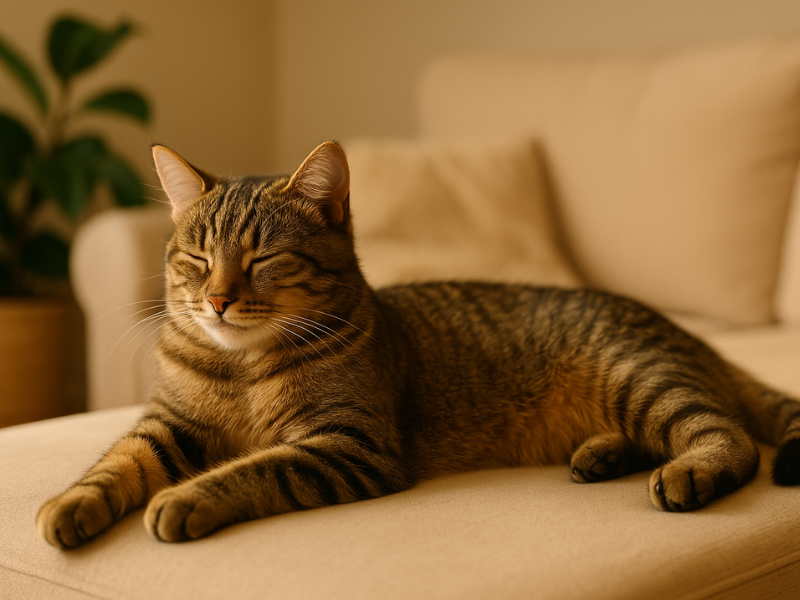
Even letting them sleep in open, vulnerable positions, like belly-up or with their paws stretched out, is a sign that your home feels safe enough. Recognizing those signals and meeting them with a calm environment helps them lean into relaxation as their default response.
Clear Signs That Stress Is Going Down: Real Indicators You’re on the Right Track
When you’re in the middle of helping your cat find their calm again, it’s natural to wonder if you’re doing it right or getting something wrong. The good news is that cats show pretty clear signs when they’re starting to feel better. Some are subtle at first, but they quickly become obvious if you’re paying attention.
Positive Physical Changes That Signal Well-Being
When stress drops, the body shows it. Their coat gets shinier and thicker, shedding decreases, and excessive grooming usually eases up. They also take on looser postures, stretch their back more freely, and breathe more deeply. These details, easy to overlook, are a beautiful sign that they’re starting to feel safe again.
Emotional Changes That Show They’re Finding Their Balance
A cat that’s improving tends to be more curious, more available, and less reactive. If they seek you out to rest nearby, or start exploring areas they’d stopped visiting, it means their confidence is growing. You’ll also notice a softer look in their eyes, a less watchful posture, and a more fluid way of moving.
Behavioral Changes That Confirm Their Anxiety Is Easing
When a cat goes back to using the litter box without issues, picks up play with more enthusiasm, sleeps in visible spots, or spends less time hiding, that’s usually a clear signal that stress has come down. You may also notice less persistent meowing or less attention-seeking behavior. The small routines start flowing again the way they used to, and that’s always great news.
What Minursi Taught Me Without Even Trying
I never thought living with a cat could teach me so much about patience, listening, and empathy. Minursi showed me that feline stress is a quiet language you can learn to read if you’re willing to observe. He also taught me that coexistence isn’t a technique; it’s an ongoing conversation where every signal matters. Sometimes, all it takes is moving a bed, adjusting a schedule, respecting a hiding spot, or playing for five minutes a day to shift their whole emotional world.
The most surprising part for me was realizing that when he relaxed, I did too. His well-being influenced mine and vice versa. It was a beautiful reminder that sharing a home with an animal isn’t a task; it’s a bond you build day by day with love and presence.
Simple Actions You Can Start Today: A Quick Plan for Reducing Stress in Your Cat
I know that after this much information, you might just want something practical to start with right now. So here’s a small plan you can put into action today without overcomplicating things.
Step One: Observe for Forty-Eight Hours Without Intervening Too Much
Just watch. Pay attention to their routines, their movements, their favorite spots, and the moments when they seem most restless. Jot down anything that stands out.
Step Two: Set Up a Perfect Retreat Where They Can Withdraw in Peace
A box with a blanket, a soft cave, or a quiet corner under a piece of furniture can become their safest place if nobody disturbs them there.
Step Three: Introduce One Simple New Stimulus to Spark Their Curiosity
It could be a box, an extra scratching post, a different ball, or a rope with a new texture. The idea is to give them something that catches their interest without overstimulating them.
Step Four: Add a Short, Consistent Play Session Every Day
Even if it’s just five minutes a day, try to keep it at the same time. This reinforces their emotional stability and redirects their energy.
Step Five: Check In with Yourself. Your Energy Matters More Than You Think.
If you’re calm, your cat picks up on it. If you’re tense, they feel that too. You don’t have to be perfect, just aware that they often regulate through you. Bringing your own stress down also helps bring theirs down.
After everything we’ve covered, I’d love to know what brought you here. Every story with a stressed cat is different, but they all share that deep desire to help them feel better. You can tell me your cat’s name, what signs of stress you’ve noticed, what changes you’ve tried, or what you’d like to understand more. Sometimes, what one person shares helps someone else who comes along later looking for the same answers.
If you feel like it, leave your experience, your question, or just a hello. I’d love to read it and be here for whatever you need. In the end, learning about feline well-being is something we do together, step by step, with curiosity and care.

